

Coordinate thermal management with backup power
Liquid cooling and backup power address two connected conditions of high-density computing: managing heat and maintaining power continuity. The right scope depends on the facility, equipment, interfaces, and operating requirements.
Review Power & Cooling Needs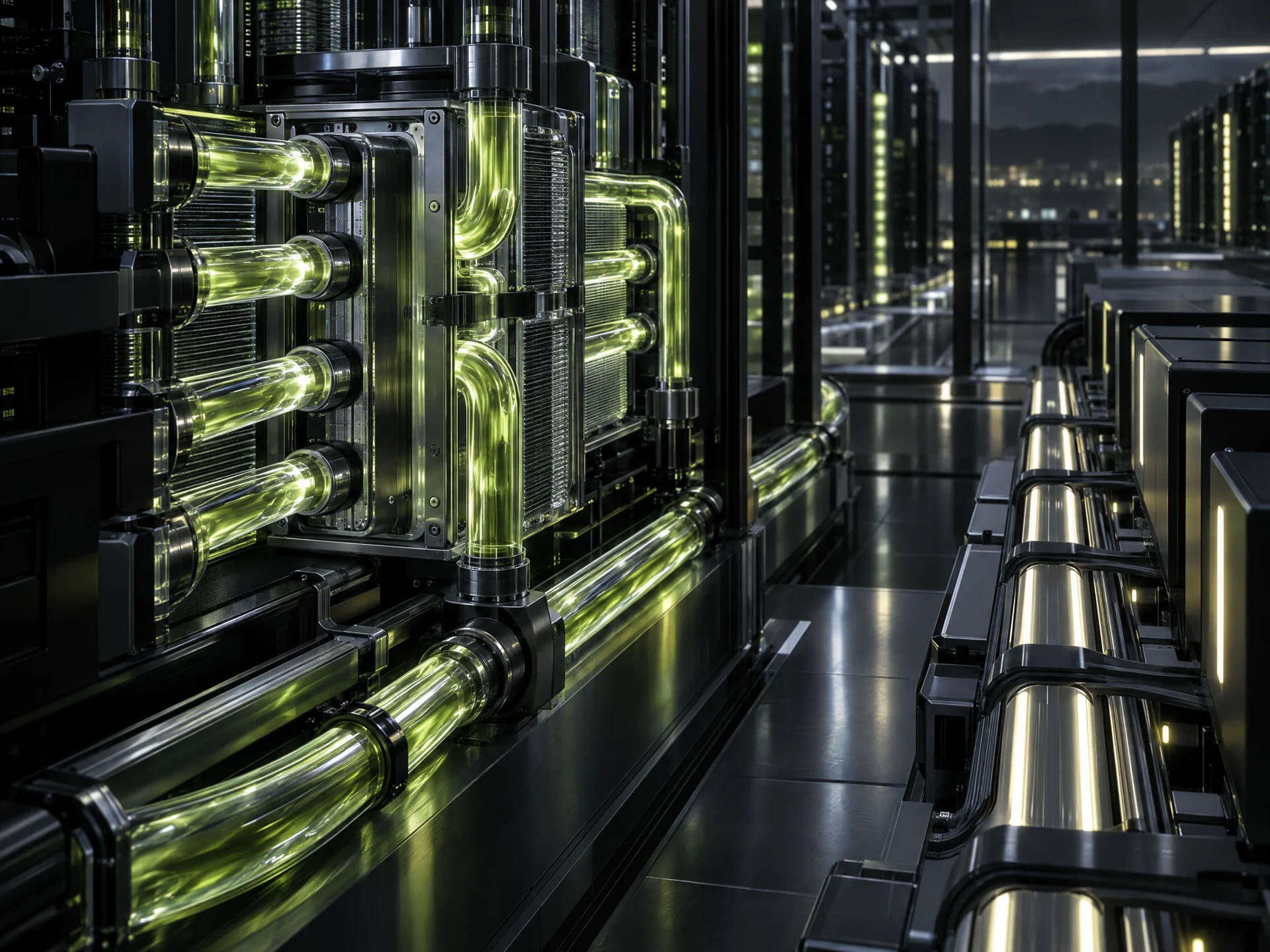
Two infrastructure paths, one operating context
We frame thermal management and backup power as coordinated infrastructure decisions, covering system interfaces, controls, safety considerations, testing, and operational responsibilities without prescribing a product.
Understand the
system relationships.
Follow the heat.
The thermal path connects the compute environment to facility heat rejection. Cooling design must account for the workload, system interfaces and operating conditions.
Illustrative relationships only. System design, configuration and performance are project-specific.
Define the interfaces.
Design for the workload.
Liquid cooling integration
Define cooling distribution, heat exchange, piping, controls, monitoring, and maintenance interfaces around the selected equipment and facility design.
Backup power planning
Align backup power architecture, transfer behavior, protection, monitoring, maintenance, and autonomy expectations with the critical load profile.
Integrated readiness
Coordinate cooling and power interfaces through installation, testing, commissioning, documentation, and operating handover so dependencies are visible.
Bring the right
project information.
Thermal compatibility+
Cooling approach, heat rejection path, water or coolant requirements, controls, and maintenance access must suit the equipment and facility context.
Power continuity+
Backup arrangements should be assessed against critical loads, transfer requirements, protection coordination, maintenance needs, and the consequences of an interruption.
Safety and monitoring+
Leak detection, alarms, isolation procedures, battery safety, environmental monitoring, and response responsibilities should be defined before commissioning.